

Nudity in Advertising: The Complete Guide
Using nudity in advertising is a high-risk, high-reward strategy. Brands use it to cut through the noise of a crowded market. It’s a guaranteed way to make people look, but when it fails, it can fail spectacularly—sparking public outrage, damaging a brand’s reputation, and even causing legal trouble.
The Strategy Behind Using Nudity in Ads
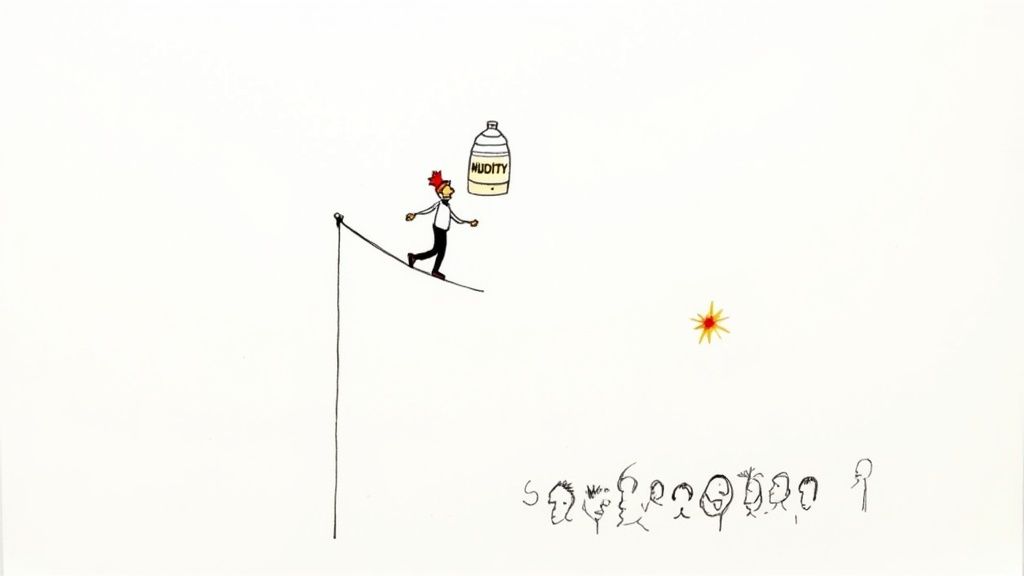
Let's be clear: launching an ad campaign with nudity is like walking a tightrope. If you succeed, your campaign could become iconic, talked about for years. If you fail, you become a cautionary tale of what not to do.
This tactic works because it taps into basic human psychology. We are wired to notice the human form, making these ads nearly impossible to ignore. In a world where we see thousands of ads daily, that split-second of attention is priceless. It allows a brand to make a bold statement, project an edgy image, and connect with people on an emotional level.
A Powerful Tool in Your Marketing Kit
Think of nudity in advertising like a potent spice—say, cayenne pepper. A tiny pinch can transform a dish, making it memorable. But add too much, or use it in the wrong recipe, and you’ve ruined the meal. It's all about balance and relevance.
So, when should you even consider it? The decision depends on three key factors:
- Brand Identity: Is your brand known for being provocative, like Tom Ford, or is it more conservative and family-focused, like Disney? The ad must feel authentic to your brand.
- Product Relevance: Nudity might feel natural for a luxury perfume or high-fashion brand. For a bank or a children's toy company? It would be jarring and out of place. For example, Axe body spray built its brand on suggestive ads, while Dove’s “Real Beauty” campaign used tasteful nudity to promote body positivity.
- Target Audience: Are you speaking to a younger, liberal audience who might see it as art? Or is your audience more traditional and likely to be offended?
> The goal is for the ad to serve the product, not overshadow it. If people remember the shocking ad but forget the brand, you've failed.
Getting this right isn't about guessing. It requires a deep understanding of your market. A competitive landscape analysis can show you how competitors handle sensitive topics, giving you a clearer picture before you act. Ultimately, context is everything—the cultural moment, your audience, and your brand’s story.
How Nudity Became an Advertising Staple
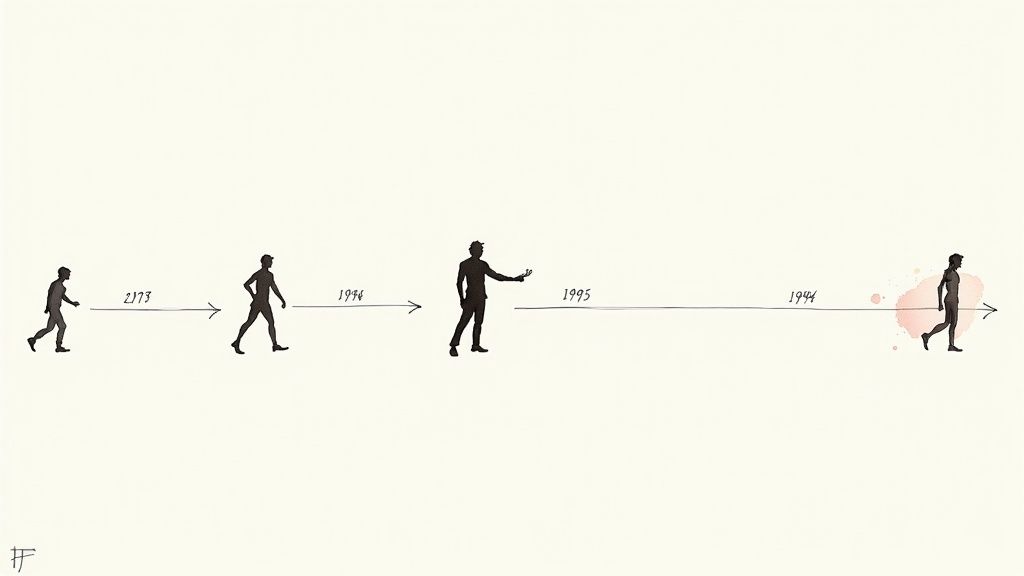
Using the human form to sell products isn't new. The history of nudity in advertising mirrors our shifting social values and what we, as a society, find acceptable. It’s a journey from subtle hints to culture-shaking campaigns.
In the early 20th century, ads were safe. Think of a classic soap ad with women in flowing, classical poses. The skin shown was meant to be artistic and symbolic, suggesting purity and cleanliness—a far cry from the overt sexuality seen later.
This gentle approach was standard for decades. Then came the cultural revolution of the 1960s and '70s. As society began to discuss sex more openly, advertisers started to push the boundaries to see what they could get away with.
The Rise of Provocative Branding
The real change happened in the 1980s and '90s. A few bold brands realized that selling an identity was more powerful than just selling a product. They used provocative images to brand themselves as the embodiment of youth, rebellion, and desire.
Calvin Klein wrote the playbook. Their iconic 1980 campaign featuring a teenage Brooke Shields saying, "You want to know what comes between me and my Calvins? Nothing," was a cultural bombshell. It sparked a national debate and forever linked high fashion with raw sensuality.
> Brands like Calvin Klein understood that controversy creates conversation, and conversation builds brands. They weren't just selling jeans; they were selling a lifestyle of confidence and allure.
This bold strategy paved the way for others. Suddenly, nudity in advertising became the go-to tactic for brands wanting to be seen as modern, edgy, and unforgettable. It was a high-risk strategy, but when it worked, it was incredibly effective.
Selling a Lifestyle, Not Just a Product
By the 1990s, brands targeting young consumers had perfected this approach. The mission was to make the brand synonymous with being cool and desirable. No one did this better than Abercrombie & Fitch.
A&F’s magazine-style catalogs, filled with artistic, semi-nude photos, became a cultural phenomenon. By 1996, the company was shipping over 1.5 million copies. The strategy was a massive success: A&F’s revenue exploded from $85 million in 1993 to $1.35 billion by 2000. You can discover more insights about sex in advertising and its impact on brands.
These campaigns were effective because they sold an aspirational world. The clothing felt secondary to the lifestyle on display—a world of youth, beauty, and rebellion. The nudity wasn't just for shock; it was part of the brand’s DNA, signaling that it was exclusive, daring, and desirable.
So, does using nudity in ads actually boost sales?
That's the million-dollar question. The honest answer is: it’s complicated. On one hand, our brains are wired to notice provocative images, creating an instant spike in attention that can lead to strong brand recall. On the other hand, it's a tightrope walk where one misstep can cause the campaign to backfire.
It’s not just about making people look; it’s about making them remember the right thing. When an ad cleverly links nudity to the product, the results can be powerful. For example, a high-end perfume campaign might use artistic nudity to evoke intimacy and desire, tying that emotion directly to the product's promise.
But when the connection feels forced—like using a bikini-clad model to sell car tires—the strategy usually fails. People can spot a cheap gimmick. The likely outcome? Your brand is labeled "tasteless" or "exploitative," which is the opposite of persuasive.
The Psychology of Attention and Recall
At a basic level, our brains are wired for survival, which includes noticing anything related to human connection. This is why nudity in advertising can effectively cut through digital noise. It taps into our primal focus, making us look even if we don't consciously intend to.
This immediate attention can translate into better brand recall. Studies show that emotionally charged or surprising ads stick in our minds longer than neutral ones. When done well, the allure or shock of a provocative ad can burn a brand's name into a consumer's memory.
> The challenge isn't just getting people to remember the ad. It's getting them to connect that memory with a positive feeling toward the brand and, ultimately, a desire to buy.
This is the delicate balance where many campaigns fail. Positive recall can build brand affinity, but if an ad is seen as offensive, it can do long-term damage to your reputation and revenue. The goal is to be memorable for the right reasons.
The Dangerous Vampire Effect
The biggest risk with this strategy is the "vampire effect." This happens when the provocative visuals are so overwhelming that they suck the life out of the brand message. People remember the racy images perfectly, but they have no idea what product was being sold.
Imagine a Super Bowl commercial that everyone talks about the next day. If the conversation is all about the ad's edgy content but no one can name the company behind it, that campaign is a failure. The nudity became a vampire, draining all attention away from the brand.
This highlights a critical point: buzz does not equal success. An ad can generate tons of views and shares but still produce a terrible return on investment if it doesn’t drive brand recognition or sales. To better understand this, you can learn how to measure your marketing effectiveness by comparing your ROI vs ROAS.
Avoiding this trap requires strategic discipline. Any use of nudity must serve a clear purpose that reinforces your product or brand values.
Here's when the vampire effect often strikes:
- Low Product Relevance: No logical link between nudity and the product (e.g., a shirtless model for accounting software).
- Excessive Shock Value: The ad is so overtly sexual that the shock is the only thing people remember.
- Poor Branding: The company logo or product name is barely visible or poorly integrated, getting lost in the visuals.
A successful ad makes the product the hero. If you use nudity, it should only be a supporting character that helps tell the hero's story—not steal the spotlight.
Navigating a World of Different Cultural Rules
An ad that’s celebrated as brilliant in Stockholm could get you banned in Riyadh. This is the reality of using nudity in advertising. A one-size-fits-all global strategy is a recipe for disaster. What one culture sees as artistic, another might find deeply offensive.
This gap creates a minefield for global brands. Campaigns that succeed in Western markets can backfire completely in more conservative parts of Asia, Africa, or the Middle East. The line between "edgy" and "unacceptable" is drawn by local laws, religious beliefs, and social traditions.
The Global Divide on Display
To put it simply, attitudes toward nudity in ads are all over the map. This table gives a sense of the global landscape.
Global Views on Nudity in Advertising
| Region | General Consumer Attitude | Regulatory Environment | Commonly Accepted For |
|---|---|---|---|
| North America | Generally tolerant, especially for art or humor. | Moderate; depends on platform (broadcast vs. print/online). | Perfume, fashion, art, health products. |
| Western Europe | High tolerance; often viewed as artistic expression. | Liberal, with self-regulation and industry standards. | High fashion, art-driven campaigns, body-positive messaging. |
| Middle East | Highly conservative; often viewed as immoral. | Very strict; outright bans on nudity in most media. | Not applicable; rarely, if ever, used. |
| East Asia | Varies; conservative in public but more open in some sub-cultures. | Moderate to strict, with strong cultural taboos. | Beauty and cosmetic products (subtle). |
| Latin America | Generally liberal and open, similar to Western Europe. | Mixed; varies by country, but often quite relaxed. | Beachwear, beauty, and entertainment advertising. |
This table is a simplified guide. The real world has nuances within every region. But it shows how crucial it is to do your homework before launching a campaign.
Why Localization Is Non-Negotiable
Translating ad copy is not enough. True localization means rethinking the entire creative concept to align with local values. It requires a deep respect for your audience.
> A brand’s message is only as good as its reception. Ignoring cultural context is like telling a joke in a language your audience doesn't understand—at best it falls flat, at worst it deeply offends.
Solid research is your best friend here. A 2022 study comparing consumers in Pakistan and the United States found that in Pakistan, ads with nudity were seen as annoying or insulting, damaging feelings toward the brand. In the U.S., however, consumers were far more tolerant.
This infographic breaks down the marketer's challenge: grab attention and build brand recall, but avoid the "vampire effect" where sexy imagery overshadows the product.
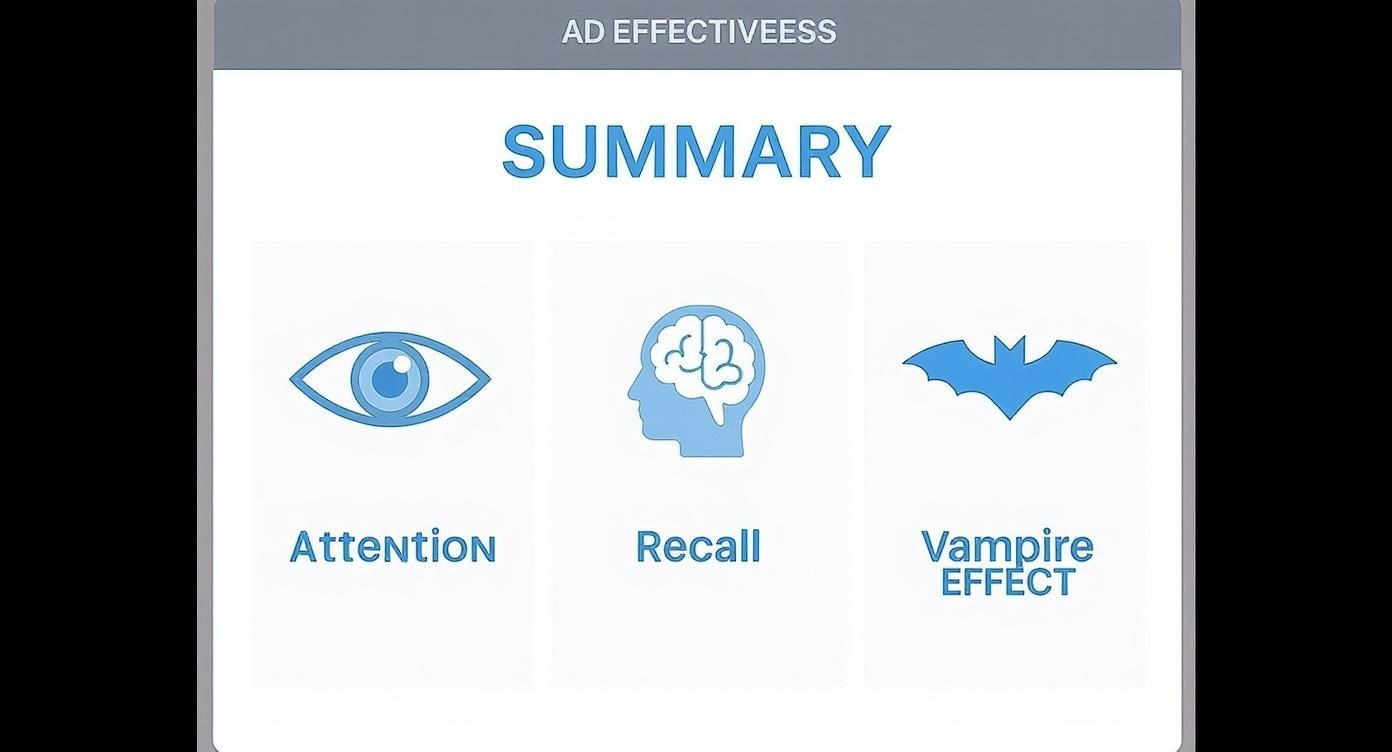
As you can see, while nudity is a powerful tool for getting attention, it can easily backfire without strategic and cultural precision.
To get this right, you must invest in a thorough audience analysis before spending on production. A successful global campaign isn’t one that runs everywhere; it’s one that’s thoughtfully adapted for every market it enters. You can learn more in our guide on how to conduct an audience analysis and build a stronger foundation for your international marketing.
The Ethics of Portraying Gender and Body Image

Beyond sales and attention, using nudity in advertising raises tough ethical questions. The real issues aren't just about showing skin. It’s about how we show it, whose skin we show, and what message that sends.
A clear pattern emerges: female nudity is far more common, often more explicit, and almost always presented differently than male nudity. This reflects deep-seated cultural norms that have long shaped advertising.
This imbalance has real-world consequences. It can reinforce outdated stereotypes, contribute to the objectification of women, and promote impossibly narrow body standards. Today's marketers must think carefully about these portrayals and their social impact.
The Gender Disparity in On-Screen Nudity
This gender gap is backed by data. A major 2020 study of 1,755 TV ads across 13 countries found a striking disparity. The research confirmed that female characters were significantly more likely to be shown nude or semi-nude than male ones. You can read the full research about these advertising trends to see how widespread this issue is.
This data highlights a fundamental imbalance. Often, male nudity is used to convey power, athleticism, or humor. Female nudity, in contrast, is frequently used to signal vulnerability, passivity, or seduction, turning women into objects of desire rather than active characters.
> When ads consistently portray one gender as an object to be looked at and the other as the one doing the looking, it reinforces a power dynamic with effects that go far beyond selling a product.
Sticking to this old playbook is not just ethically questionable; it can be a strategic mistake. Modern consumers, especially younger generations, are more sensitive to issues of gender equality and representation. Brands using outdated, objectifying tropes risk alienating a massive and influential audience.
The Impact on Body Image and Societal Norms
You can't discuss nudity in advertising without addressing its effect on body image. For decades, ads have promoted a very specific, limited ideal of beauty—one that is overwhelmingly thin, young, and flawless. This constant bombardment of idealized bodies creates a damaging cycle of comparison and self-doubt.
Adding sexualization only increases the pressure. It sends the message that a person's value is tied to their appearance and ability to fit a narrow standard of attractiveness. This can contribute to serious problems, including:
- Unrealistic Body Standards: Promoting a "perfect" body that is biologically unattainable for most people.
- Increased Body Dissatisfaction: Fueling feelings of inadequacy and low self-esteem.
- Reinforcing Harmful Stereotypes: Tying specific body types to success and desirability.
But things are starting to change. Brands like Dove with its "Real Beauty" campaign and Aerie with its unretouched #AerieREAL photos have shown a better way. By celebrating diverse bodies, skin tones, and ages, they have not only created more inclusive advertising but have also built fiercely loyal brand communities.
These campaigns prove that responsible advertising isn't just "doing the right thing"; it's good business. By ditching tired stereotypes and embracing authenticity, brands can build deeper connections with consumers who want advertising that reflects the real world.
Your Questions About Nudity in Ads, Answered
Let's tackle some common questions about the real-world challenges of using nudity in advertising.
Is It Legal to Use Nudity in an Ad?
There’s no simple "yes" or "no." The answer depends on geography, culture, and the specific platform.
In many Western countries, it’s not strictly illegal, but advertising standards bodies regulate decency and push back against harmful objectification. In more conservative nations, it could be against the law.
And that’s just the start. Digital platforms like Meta (Facebook, Instagram) and Google have their own strict rules, which are often more restrictive than national laws. Before you launch, you must check your campaign against three layers of rules: the law of the land, local cultural norms, and the terms of service for every platform you use.
Does Nudity Work Better on Social Media or in Print?
The medium changes the message. In a glossy fashion magazine, an artistic nude photo can seem sophisticated and luxurious. On broadcast TV, the rules are so tight that anything provocative is nearly impossible.
Social media is a different world. Platforms like Instagram and Facebook have official bans on nudity and will penalize accounts that violate their rules. Yet, suggestive content can generate massive engagement. The risk? That engagement might come from the wrong audience, or worse, get your content removed and your account suspended. A racy ad might get clicks, but if it doesn't match your landing page, you’ll end up with a high bounce rate and zero sales.
> Don't just ask, "Will this get attention?" Ask, "Will this get the right kind of attention from the right people in the right place?" If the answer to any of these is no, the campaign is not viable.
How Do I Know if This Strategy Is Right for My Brand?
Before you consider this strategy, ask yourself three honest questions. The answers will tell you if you're taking a calculated risk or just being reckless.
- Is it relevant to the product? Using nudity to sell a fragrance makes sense. Using it to sell banking software does not. The connection must be obvious.
- Does it match your brand’s personality? An edgy brand like Tom Ford can pull this off because it’s part of their identity. If you’re a wholesome, family-friendly brand, it will feel fake and jarring.
Do you really* know your audience? What excites a young, urban audience in Berlin could offend a more traditional one in Dubai. You must understand their sensitivities.
If you hesitate on any of these, it's a major red flag. This strategy is likely not for you. Successful nudity in advertising requires a clear purpose, perfect brand alignment, and deep audience understanding. Without that foundation, you’re inviting a PR disaster.
---
Ready to stop guessing and start building? At Proven SaaS, we analyze thousands of successful ads to uncover profitable, validated SaaS ideas every day. Find your next big opportunity with data, not guesswork. Explore proven SaaS ideas on proven-saas.com.
Build SaaS That's
Already Proven.
14,500+ SaaS with real revenue, ads & tech stacks.
Skip the guesswork. Build what works.
Trusted by 1,800+ founders


