


How to Launch Your Education Tech Startup: A Step-by-Step Guide
So, you want to launch an education tech startup? Great choice. You’re entering a field that’s not just about building a business—it’s about changing how people learn. It's an exciting space, but also a crowded one. The path to success involves finding a real problem in education, building a simple tech solution that works, and then figuring out how to grow it into a sustainable company.
Your journey is a mix of big opportunities and even bigger challenges. This guide will walk you through it, step by step.
Step 1: Understand the EdTech Landscape
Before you write a single line of code, you need to understand the world you're about to enter. A great idea is a good start, but the market will ultimately decide if your startup succeeds or fails.
The EdTech market has grown up. It’s no longer a new frontier; investors are now more selective. While startups in this space raised around $2.4 billion in a recent year, the money is now flowing towards companies with a clear path to profitability. The average deal size has climbed to $7.8 million, showing that investors want to see a solid plan.
This isn’t meant to scare you—it’s to show you that a strong strategy from day one is essential.
What’s Hot in EdTech Right Now?
A few key trends are shaping the current EdTech scene. For example, AI-powered personalized learning is no longer just a buzzword; it’s an expectation. Users want platforms that adapt to their individual learning pace and style.
At the same time, the corporate world is investing heavily in employee upskilling and training tools. Businesses need solutions to keep their teams competitive, creating a huge B2B opportunity for any new education tech startup that can deliver measurable results.
> Key takeaway: The market rewards focus. A tool that solves one specific problem for one specific audience will almost always beat a generic platform that tries to do everything for everyone.
This means you must know your niche. Sizing up the competition isn't a one-time task; it's an ongoing process. To get started, check out this guide on how to conduct a competitive landscape analysis. Getting this right will help you make smarter decisions and find your unique place in the market.
Step 2: Find and Validate Your Idea
You have an idea for an EdTech startup. That’s great. But before you spend any money on development, you need to answer one critical question: are you solving a problem people actually care about?
The startup graveyard is full of amazing products that nobody wanted. Your first job isn't to build something; it's to find a real, nagging pain point that a specific group of people is desperate to solve.
Start by exploring the different worlds within education: K-12, higher education, and corporate training. Each one has its own set of frustrations. For example, a high school teacher might be overwhelmed with grading, while a corporate training manager struggles to prove the ROI of their programs. Don't guess—go out and find these problems.
How to Find Real User Pain Points
Surveys are easy, but they often give you shallow answers. To find the deep insights that build great companies, you need to have real conversations. Your goal is to get people to talk about their daily challenges and frustrations.
Here’s how you can do it:
- Talk to Teachers: Ask them to describe a typical day. Where do they get stuck? What tasks are the most frustrating? Listen for emotional phrases like, "It's a complete nightmare trying to..." or "I waste hours every week on..."
Talk to Students: What helps them learn? What makes them lose interest? Understand how they actually study, not how they think* they should. What apps do they love, and which ones do they ignore?
- Talk to Administrators: They focus on budgets, compliance, and efficiency. Your goal is to uncover the systemic problems that keep them up at night. For instance, what data do they need but can't easily get?
> Real-World Example: The founders of ClassDojo noticed teachers struggled with parent communication. Instead of building a complex school management system, they created a simple app for teachers to share classroom moments with parents. It solved one specific, high-priority problem.
You're looking for a need that is currently being ignored or poorly served. We go much deeper into this process in our guide on how to find profitable SaaS niches.
Time to Test Your Big Idea
Once you've identified a problem, it's time to see if your proposed solution is a good one. This is where you move from "I think" to "I know." The goal is to test your assumptions quickly and cheaply.
A great way to do this is with a one-page business model canvas. It forces you to think through the essential parts of your business—like who your customers are, what value you provide, and how you'll make money—before you get lost in the details.
This validation process is your best defense against building something nobody will pay for.
EdTech Startup Idea Validation Checklist
Use this simple checklist to test your idea by focusing on market need, user pain, and competition.
| Validation Step | Key Question to Answer | Example Tactic |
|---|---|---|
| Problem-Solution Fit | Does my solution truly solve a top-priority problem for a specific user? | Conduct 20-30 interviews with your target users and ask them to rank their biggest daily frustrations. |
| Market Demand | Is there a large enough group of people with this problem who are willing to pay for a solution? | Use Google Trends and keyword research tools to check search volume for terms related to the problem. |
| Buyer & User Alignment | Does my idea appeal to both the person who will use it (e.g., a teacher) and the person who will pay for it (e.g., an administrator)? | Create a simple one-page PDF outlining the benefits for both and get feedback from each group. |
| Competitive Landscape | How are people solving this problem now? Is my solution clearly different or 10x better? | Make a simple chart comparing the top 3 existing solutions (or workarounds). |
| Willingness to Pay | Can I prove that customers will actually open their wallets for this? | Create a simple landing page with a "Join the Waitlist" button to see how many people sign up. |
This checklist forces you to be honest with yourself. It's much better to discover a flaw in your idea now than after you've spent a year and a fortune building it.
Following the money also helps. Data shows investors are betting on focused solutions. The average funding round for an AI EdTech startup recently hit $12.3 million, far more than the $6.8 million for non-AI companies. This signals a strong demand for personalized learning. Similarly, companies are increasing their training budgets, with average spend per employee climbing from $1,200 to $1,650. These numbers show where the growing education technology market is headed. By validating your idea, you make sure you’re building something the market actually wants.
Step 3: Design a Lean Minimum Viable Product (MVP)
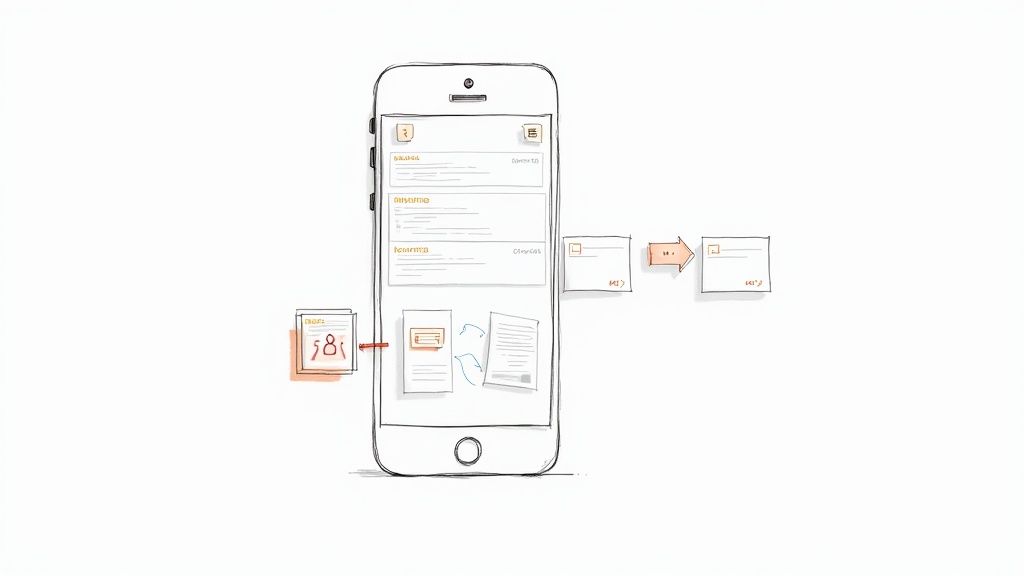
Here’s a hard truth: your first product should not do everything. It has only one job: to solve your user's single biggest problem so well that they can't imagine going back. This is the core idea behind a Minimum Viable Product (MVP). It’s the smallest, simplest version of your product that delivers real value.
For example, if your big idea is a platform to help students with math homework, your MVP isn't a huge suite with video lessons, games, and parent portals. No, your MVP might just be a simple tool that helps students solve one specific type of algebra problem extremely well. This laser focus is your greatest strength as an early-stage education tech startup.
The real goal is to get a working product into the hands of real users as quickly as possible. Why? Because that’s when the real learning begins: gathering feedback.
How to Prioritize Features (The Ruthless Way)
Deciding what to include in your first version is tough. This isn't about building a cheap product; it's about building a focused one. You have to be ruthless in separating the "must-haves" from the "nice-to-haves." Here’s a simple way to categorize every potential feature:
- Core Functionality: These are the absolute essentials. They directly solve the user's main problem. Without them, the product is useless.
- Secondary Features: These add value but aren't critical for launch. Think of them as great ideas for future updates based on user requests.
- Delighters: These are the cool, innovative features that will eventually make your product special. Save them for later, after you've proven your core idea works.
Think about Duolingo. It didn't launch with leaderboards, stories, and AI-powered conversations. It started with simple, effective translation exercises. They perfected the core learning experience first, then added more features later.
Prototyping Without Writing Code
Before you start building, you need a clear picture of what you're making. This is where wireframes and simple prototypes are invaluable. You don't need fancy software—tools like Figma or even just a pen and paper work perfectly.
Create a basic, clickable prototype that shows how a user would move through the main task. This visual is crucial for getting early feedback. You can show it to potential users and ask, "Does this make sense? Would this solve your problem?" Answering these questions now will save you thousands of dollars and months of wasted development time.
For a more detailed roadmap on this, check out our guide on MVP development for startups.
> Remember: Your MVP is not a final product; it's an experiment. Your hypothesis is: "If we build this one core feature, users will find it valuable." The launch is how you test that hypothesis.
This build-measure-learn cycle is the engine of successful startups. It ensures every decision is based on what your users actually need, not just what you think they want.
Step 4: Build and Launch Your Product
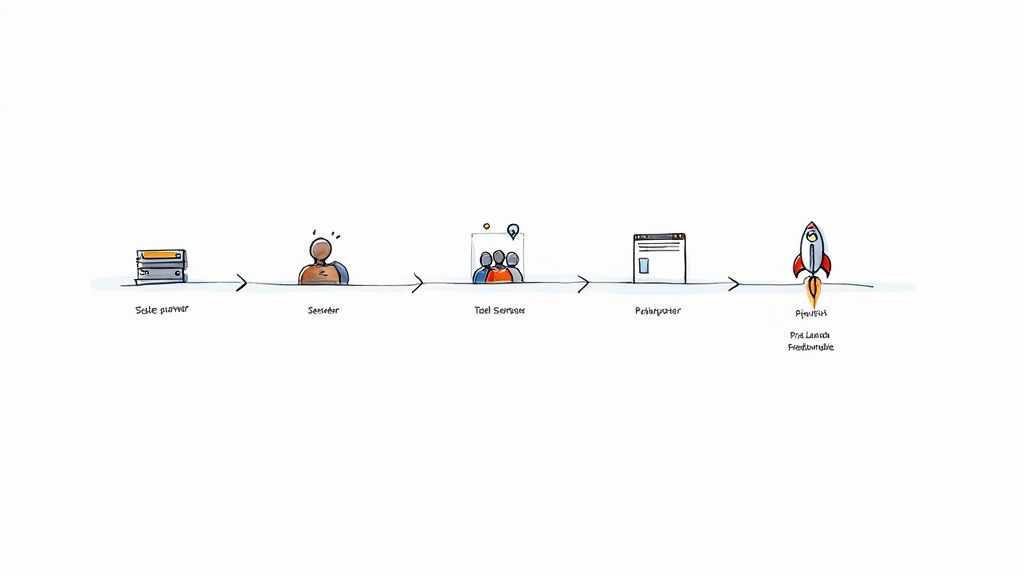
Okay, you’ve validated your idea and designed a lean MVP. Now it's time for the exciting part: turning your plan into a real, working product. This is where your decisions directly impact your budget and timeline.
One of the first big choices is your technology stack. This is more than just picking a programming language; it's about choosing tools that can grow with you. For an education tech startup, security and data privacy are critical from day one, especially if you handle student data. You must consider regulations like FERPA and GDPR from the start.
You're looking for a tech stack that is powerful enough to scale but simple enough to allow for fast development. For example, a new language-learning app might start with a simple Node.js backend and a cloud database. This setup is straightforward but can also handle a surge of new users without a complete overhaul.
How to Manage the Building Process
How you manage development depends on your team. Whether you’re a non-technical founder working with freelancers or have a small in-house team, clear communication and realistic deadlines are key.
- If You're a Non-Technical Founder: Your job is to be an excellent project manager. Use tools like Trello or Asana to track progress. Define what needs to be built with extreme clarity to avoid "scope creep," which can drain your time and money.
- If You Have an In-house Team: Use an agile approach. Break the work into short, two-week "sprints." The goal of each sprint is to build, test, and get feedback on a small piece of the product. This prevents you from spending months building a feature nobody wants.
For example, if you're creating a virtual science lab, your first sprint might focus on building just one experiment. You can then test it with a few students to get feedback on the core experience before building out dozens more. This iterative approach saves you from making big, costly mistakes.
> The biggest risk during the build phase is losing momentum. Good project management isn't about rigid plans; it's about creating a system that ensures steady, measurable progress to keep your team motivated and your budget on track.
Planning Your Product Launch
Don't think of your launch as one big event. A smart launch is a series of carefully planned steps designed to build excitement and gather crucial feedback before you open the doors to everyone.
Start with a simple pre-launch landing page. Its only job is to explain what you're building and collect email addresses from interested people. This gives you an audience to contact on launch day.
Next, plan a pilot program with a small, hand-picked group of beta testers. These should be the ideal users you interviewed during the validation stage. Offer them early access in exchange for their honest feedback. This beta period is your best opportunity to find bugs and improve features based on how people actually use your product.
For instance, a startup building tools for teachers might run its pilot program with a single school. This allows them to perfect the onboarding process, gather powerful testimonials, and build a strong case study before trying to sell to a wider market.
Step 5: Take Your EdTech Product to Market
Building a great product is a huge achievement, but it's only the beginning. Now comes the hard part: getting it into the hands of the teachers, parents, and administrators who need it. The education market is unique, with its own rhythms and long sales cycles. A generic marketing plan won't cut it. Your go-to-market strategy must be tailored to how your specific buyers think and make decisions.
The first step is to get your messaging right. A teacher cares about saving time and engaging students. A district administrator worries about budgets, data privacy, and showing a return on investment. You need to speak to each of them in their own language, highlighting the benefits that solve their specific problems.
For an education tech startup, this is essential. You’re not selling features; you’re selling solutions.
Finding the Right Sales Model
How you sell is just as important as what you sell. Your sales model will affect your pricing, team structure, and even customer support. In EdTech, a few models have proven to be successful.
- The Freemium Model: This is a classic for a reason. You offer a basic, useful version of your product for free. The goal is for individual users, like teachers, to love it and eventually convince their school to upgrade to a paid plan with premium features. It’s a great way to get your foot in the door.
- Direct-to-Consumer (D2C): This involves selling directly to parents or students. This requires strong consumer marketing skills and is usually best for lower-priced products like supplemental learning apps or test-prep tools.
- Enterprise Sales: This is the big league—selling directly to schools or entire districts. The sales cycles are long and often tied to the school year, but the contracts are much larger. This model requires a skilled sales team that understands how to navigate the complex world of school procurement.
Many successful EdTech companies blend these models. They might use a freemium product to build a large base of teacher fans who then act as champions to help land a larger enterprise deal with their district.
> A common mistake: Many founders underestimate the school district sales cycle. Major purchasing decisions are often made in the spring for the next school year. If you miss that window, you could be waiting a full year for another chance.
Digital Marketing That Connects with Educators
Forget flashy ads—they rarely work in education. Teachers and administrators trust recommendations from colleagues far more than marketing campaigns. This is why content and community are your most powerful tools.
Create genuinely helpful content that makes an educator's job easier. This isn't about selling; it's about building trust and positioning your company as a valuable partner.
Here are some ideas:
- Free, downloadable lesson plans
- Webinars on new teaching strategies
- Blog posts that address common classroom challenges
For example, if you've built a platform that teaches kids to code, instead of running ads that say "Buy Our Tool," you could create a free "Hour of Code" activity guide. A teacher can download it, use it in their class tomorrow, and get immediate value. This gives them a positive first experience with your brand.
Building a community around your product—like a Facebook group or a user forum—is also a great strategy. It gives educators a place to connect, share ideas, and become your most passionate advocates.
The Resilient Founder's Playbook
Let's be clear: building an education tech startup is a marathon, not a sprint. The journey is about continuous learning and adapting along the way. Success rarely comes from a perfect launch; it comes from your resilience when things go wrong and how quickly you listen to your users.
The rules are simple: solve a real problem, start small, and become obsessed with user feedback.
Every conversation, support ticket, and data point gives you clues on how to improve. Don't fall in love with your original idea. Fall in love with the problem you are solving for your audience.
> Your ability to learn and pivot faster than your competitors is your single greatest advantage. The founders who win are the ones who treat their startup as an ongoing experiment—always testing, measuring, and improving.
To make this idea clearer, here’s a simple visual of the core engine that will drive your growth.
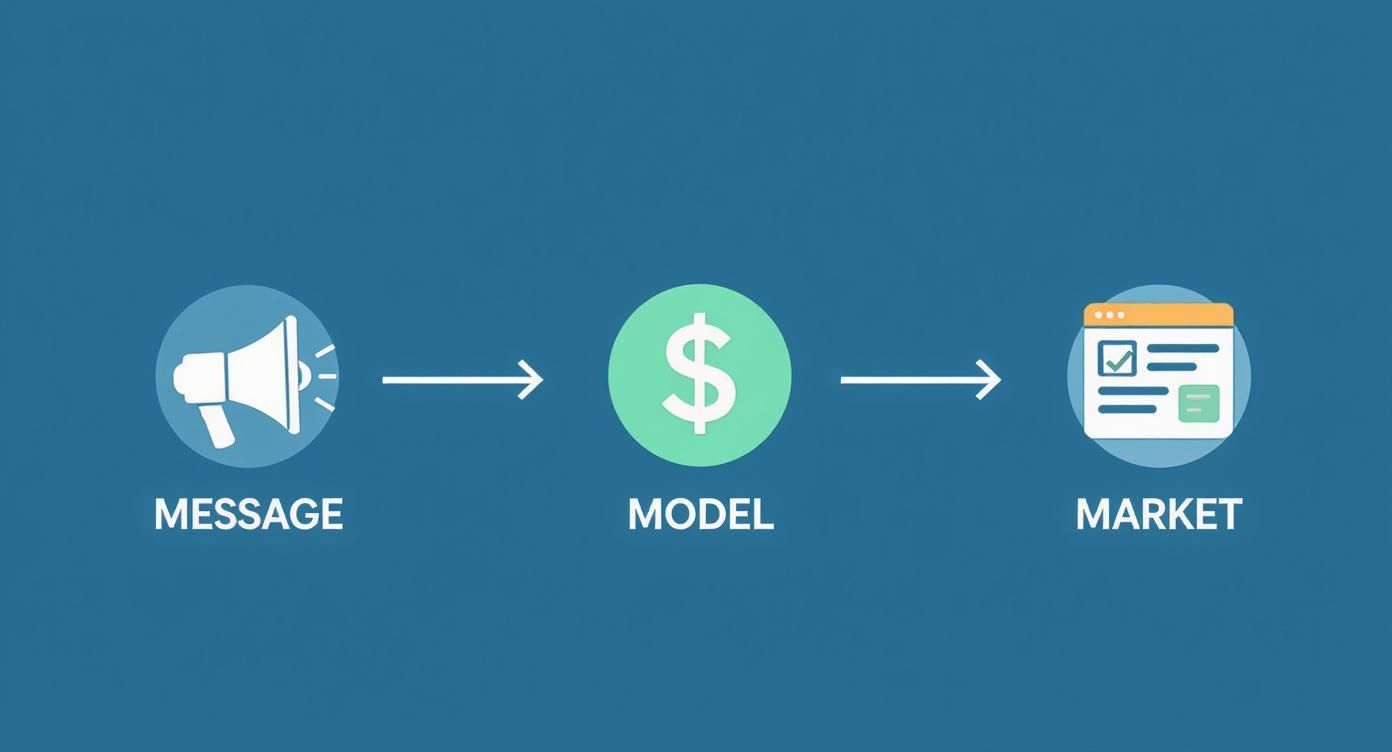
This graphic shows how your Message (how you talk about your product), your Model (how you make money), and your Market (who you sell to) all have to align perfectly.
Keep this playbook in mind. It will help you stay focused, motivated, and ready to build a company that truly makes a difference.
Common Questions About Building an EdTech Startup
Starting an education tech company comes with a unique set of challenges. Here are answers to some of the most common questions founders ask.
How Much Money Do I Actually Need to Start?
This is the million-dollar question—or is it a $10,000 question? The honest answer is: it depends on what you're building and how you plan to find your first customers.
I’ve seen scrappy founders with strong technical skills launch a working product for under $10,000. They build the MVP themselves and use their own time and effort to find their first users. It’s hard work, but it’s definitely possible.
On the other hand, if your plan involves hiring a freelance developer and running paid ads, you'll need more capital. In that case, a pre-seed funding round of $50,000 to $150,000 would be more realistic to give you enough time to get started.
> My advice: Think lean. What is the absolute simplest version of your product that can solve a real problem for a small group of pilot users? Build that first. Get proof that you're onto something, and then seek larger investments.
Who Should Be My First Hire?
This is a critical decision that can make or break your startup. The right answer almost always depends on your own skills: hire someone who fills your biggest gap.
- Are you the technical founder? If you're the one writing the code, your first hire should probably be someone who is an expert in sales or marketing, ideally with connections in education. They can start building a waitlist and talking to potential customers while you focus on the product.
- Are you the non-technical founder? Then you need a technical partner—either a co-founder or a lead developer. This person should be more than just a coder; they should be a partner in building your vision. Find someone who cares about the problem you're solving, not just the technology.
No matter their role, your first hire needs to be a "Swiss Army knife"—someone who is comfortable with uncertainty and willing to wear many hats without needing a lot of direction.
---
Ready to stop guessing and start building? Proven SaaS gives you the data-backed intelligence to find and validate your next profitable EdTech idea by showing you what’s already working. Explore opportunities with real market demand today at https://proven-saas.com.
Build SaaS That's
Already Proven.
14,500+ SaaS with real revenue, ads & tech stacks.
Skip the guesswork. Build what works.
Trusted by 1,800+ founders


